Thinking about buying a desert short-term rental outside the usual Palm Springs orbit? Joshua Tree and Yucca Valley attract a different kind of guest, and that difference matters if you are underwriting your next investment. If you want to understand where demand comes from, how local rules shape returns, and what features help a property compete, this guide will help you evaluate both markets with a clearer lens. Let’s dive in.
Why Joshua Tree and Yucca Valley Stand Out
Joshua Tree National Park is the main demand driver for this corridor. The National Park Service reported 2,991,874 visits in 2024, and the park is busiest from October through May, especially on weekends, holidays, and spring break. Since there is no lodging inside the park, nearby communities become the natural home base for visitors.
That creates a clear lodging story for both Joshua Tree and Yucca Valley. You are not buying into a market built only on generic vacation demand. You are buying into a destination-led market shaped by park access, stargazing, hiking, privacy, and design-focused stays.
For investors already familiar with the Coachella Valley, this can add diversification. Instead of repeating the same golf and resort demand profile found farther south, you can tap into a different guest motivation and a different style of desert travel.
What the Current STR Market Looks Like
Both markets are active, established, and competitive. Third-party analytics vary on exact totals, but the overall picture is consistent: Joshua Tree and Yucca Valley are mature short-term rental markets where performance depends on property quality, amenities, and compliance.
In Joshua Tree, AirDNA estimates 1,589 listings, 53% occupancy, and a $308.1 average daily rate. AirROI reports 1,132 active rentals, 45.6% occupancy, and a $316 average daily rate. In Yucca Valley, AirDNA shows 1,245 listings, 50% occupancy, and a $339.9 average daily rate, while AirROI reports 815 active rentals, 44.3% occupancy, and a $340 average daily rate.
The takeaway is practical. Simply owning a house in the right ZIP code is not enough. In this corridor, strong performance usually comes from thoughtful acquisition, design choices, operational discipline, and a property that stands out in photos and in person.
Home Prices and Acquisition Signals
Recent pricing suggests both markets still sit in a range that may appeal to investors looking for lower entry points than some resort-area alternatives. Zillow’s April 2026 typical home value was $345,770 in Joshua Tree and $358,690 in Yucca Valley. Median list prices were higher at $489,333 in Joshua Tree and $440,000 in Yucca Valley.
Redfin’s March 2026 median sale price was $365,000 in Joshua Tree and $390,000 in Yucca Valley. Joshua Tree was described as somewhat competitive, with homes selling in about 55 days. Zillow showed Yucca Valley homes going to pending in around 81 days.
That matters when you are planning offer strategy and renovation timelines. Joshua Tree may require a faster response on attractive listings, while Yucca Valley may offer a little more breathing room for selective buyers. In either case, your underwriting should leave room for permitting costs, setup expenses, and amenity upgrades.
Joshua Tree Permit Rules to Know
If you are buying in unincorporated Joshua Tree under San Bernardino County rules, any short-term rental for 30 days or less requires a permit. Applications go through the county’s EZ Online Permitting system, and the county conducts an exterior inspection to verify parking capacity and compliance with standards.
The county’s fee schedule shows a new application cost of $1,144 effective July 1, 2025. If ownership has changed, the county requires the new owner to verify title through a recorded grant deed before applying. This is not a market where you should assume you can close first and sort out compliance later.
Operational rules are also strict. Vehicles must be parked entirely on-site, with no street parking allowed. Quiet hours run from 10 p.m. to 7 a.m., and the owner or representative must be available 24/7, respond within 30 minutes, and be physically present within one hour to address complaints.
The county also restricts use beyond typical lodging. Short-term rentals may not be used for commercial purposes such as filming, corporate retreats, conferences, or wedding receptions. That limitation should be part of your revenue planning if you were considering event-driven income.
Yucca Valley Permit Rules to Know
Yucca Valley follows a different structure. The town regulates short-term vacation rentals under Ordinance 312, and permits are required for single-family dwelling units. The permit is tied to the owner and is valid for a maximum four-year period.
Applications must be filed in person by appointment, not by mail or electronic-only submission. As of April 21, 2026, the town reported that it had not reached its cap and had 148 openings for new applicants. For investors comparing the two markets, that detail makes current permit availability part of the acquisition conversation.
Yucca Valley also ties operation to business registration and transient occupancy tax compliance before renting or advertising the property. The ordinance requires a local contact person who is available 24/7, can respond within 15 minutes by phone or text, and can be on-site within 30 minutes.
Another notable point is noise compliance. The ordinance references noise-monitoring hardware or software, or an equivalent solution, before operations begin. That adds another setup item to your budget and onboarding checklist.
Occupancy Rules Can Shape Your Strategy
One of the biggest practical differences is how occupancy is handled. In Yucca Valley, the code spells out overnight occupancy by bedroom count, ranging from 2 overnight occupants in a studio up to 14 overnight occupants in 6- and 7-bedroom homes. Daytime occupancy caps range from 8 to 20, depending on bedroom count.
That makes Yucca Valley especially relevant if you are evaluating larger homes for group travel. The occupancy math is written directly into the ordinance, which gives you a more concrete framework when modeling revenue potential. If your strategy leans toward larger-format homes, Yucca Valley may deserve a closer look.
San Bernardino County rules for Joshua Tree focus more on posted limits and operating standards. That means you need to pay careful attention to the county’s permit conditions and inspection standards for each property rather than relying on a simple bedroom-based formula.
Seasonality and Guest Demand Patterns
This market is seasonal, and that seasonality is easy to trace back to park visitation patterns. Joshua Tree’s peak Airbnb season falls in March, April, and December, while the softest stretch is July through September. In Yucca Valley, March is the top revenue month and September is the weakest.
The National Park Service supports that pattern by identifying spring, holidays, and spring break as especially busy periods. If you are buying here, your cash-flow model should reflect stronger cooler-season demand and softer summer performance. Conservative summer assumptions can help you avoid overstating annual returns.
Guest mix also tells an important story. AirROI reports that about 91% of guests in both markets come from the United States, with strong representation from Los Angeles and San Diego. English and Spanish are the dominant languages, which points to a drive-to domestic customer base rather than a market built mainly on international tourism.
For Yucca Valley, average booking lead time is about 37 days. That suggests pricing strategy should adjust several weeks ahead of stay dates, not only at the last minute. Investors who treat pricing as an active process may be better positioned than owners who set rates and leave them alone.
The Unit Mix Favors Private Homes
If you are comparing these towns to urban short-term rental markets, the inventory mix is very different. Joshua Tree is 97% entire-home supply, and Yucca Valley is 95% entire-home supply. This is primarily a private-home lodging market, not a room-share market.
Joshua Tree is concentrated in 2- and 3-bedroom homes. Yucca Valley has a somewhat heavier share of 3- and 4-bedroom homes. That distinction can affect your search criteria, your furnishing budget, and the guest use cases you prioritize.
In plain terms, guests here are usually looking for a whole-property experience. Privacy, outdoor space, parking, and a cohesive design story matter more than a basic place to sleep.
Amenities That Can Support Revenue
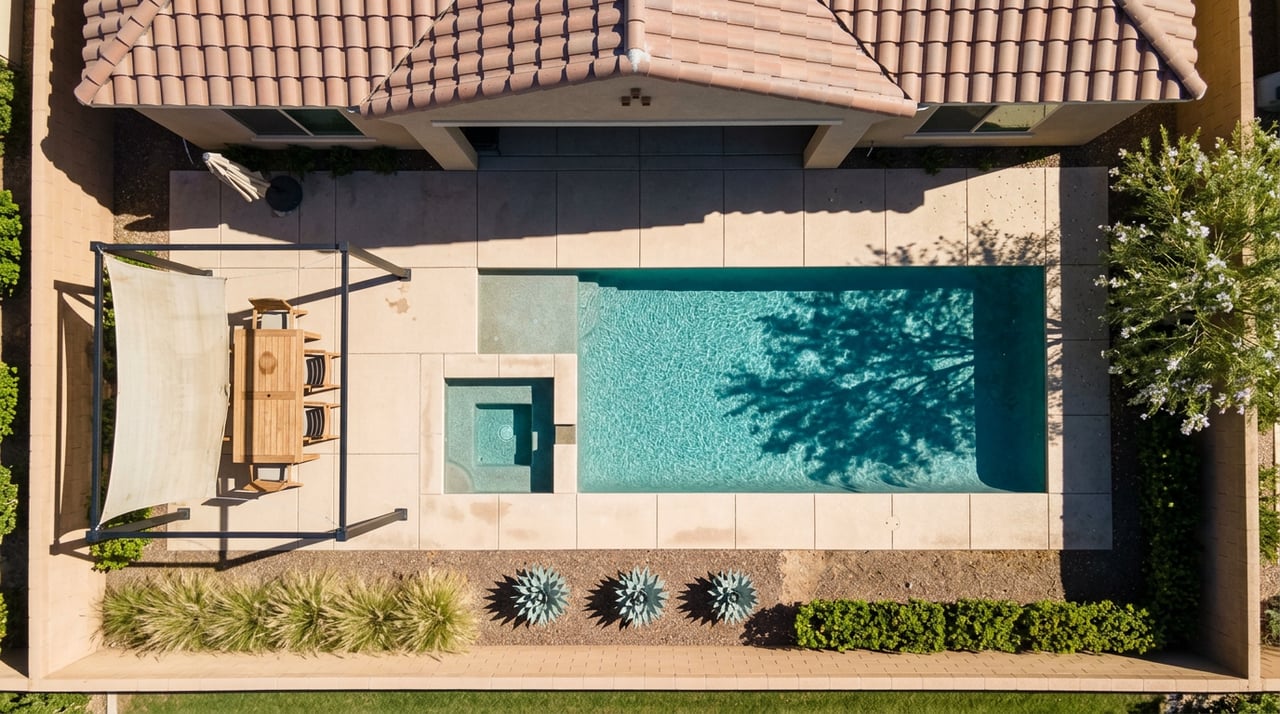
Amenity data points to a clear pattern in both markets. AirROI shows that hot tubs and pools are among the strongest revenue-linked features in Joshua Tree and Yucca Valley. In Joshua Tree, pets allowed, air conditioning, wifi, heating, parking, kitchen access, and smoke and carbon monoxide alarms also show up as essential amenities.
In Yucca Valley, hot tubs, pools, washers and dryers, and dedicated workspace all show strong revenue uplift compared with listings that do not offer them. If you are choosing between two otherwise similar properties, outdoor amenities and practical guest conveniences may have a direct effect on earning potential.
County guidance for Joshua Tree also notes that hot tubs should be covered and locked when not in use. That is a useful reminder that amenity planning is not only about revenue. It is also about operating rules, maintenance, and risk management.
Design Still Matters in a Crowded Field
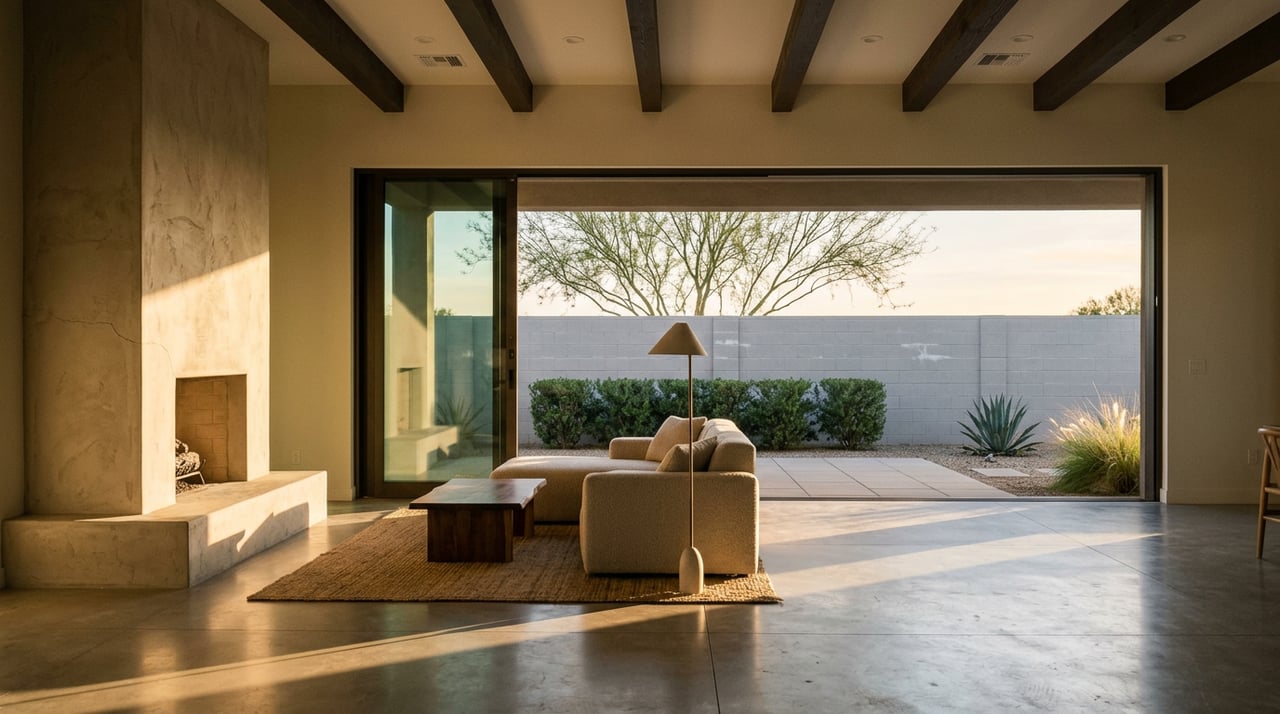
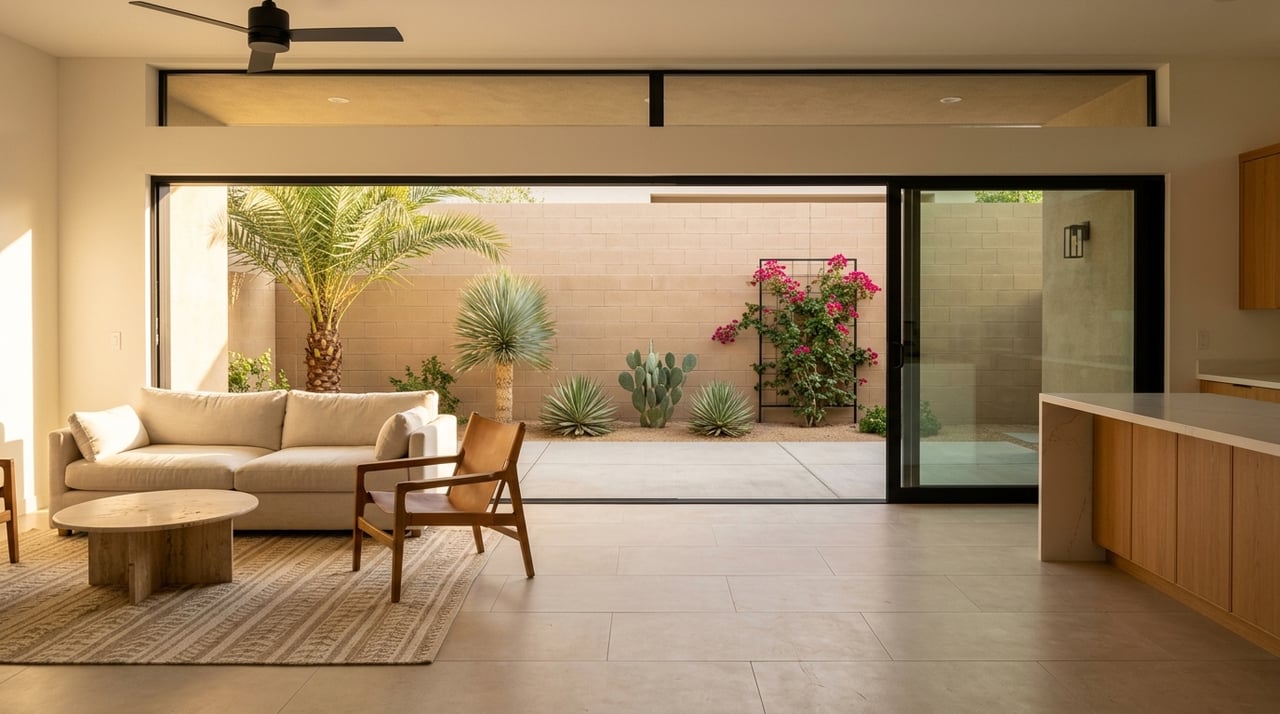
Joshua Tree and Yucca Valley are not purely numbers-driven markets. Design influences performance because guest expectations are shaped by the destination itself. Recent coverage of high-end desert lodging points to a style direction centered on desert-modern or organic-modern design, muted sand and terracotta palettes, natural materials, native landscaping, dark-sky-conscious lighting, floor-to-ceiling windows, fireplaces, patios, and strong indoor-outdoor flow.
That does not mean every property must be high-budget or architect-designed. It does mean generic vacation-rental decor may struggle to stand out. Guests often choose these homes for atmosphere, privacy, and connection to the landscape as much as for location.
Presentation is part of that equation. AirROI notes that Joshua Tree listings average 48.9 photos, and only 24.3% show their exact location. Strong photography, careful framing, and a clear visual identity are part of the competitive baseline, not optional extras.
This is where thoughtful acquisition and marketing intersect. A property with good bones, outdoor potential, and a cohesive design direction may offer more upside than a larger house with no clear guest appeal.
How to Compare Joshua Tree vs. Yucca Valley
If you are choosing between the two, it helps to think in terms of operating style. Joshua Tree benefits from the strongest park-branded identity, which can be a plus for guests who want to feel close to the destination they came for. It may appeal to buyers who want a recognizable market with strong lifestyle cachet.
Yucca Valley offers a similar high-desert demand base with somewhat more large-home inventory and a more explicit permit and occupancy structure. That can be helpful if you want clearer rules for group-sized homes or are comparing several larger properties side by side.
Neither market is passive. Both require attention to permits, response times, local contacts, guest rules, and property setup. The better question is not which town is easier, but which town better fits your budget, target guest, and operating plan.
A Smart Buying Lens for Desert Investors
For many investors, the opportunity here is not just buying any short-term rental. It is buying the right one with the right compliance path and the right guest experience. That means evaluating parking, bedroom count, outdoor usability, permit status, local rule fit, and whether the home can support the amenity package this market rewards.
It also means looking beyond spreadsheets. In a design-forward desert market, the homes that perform well often tell a clear visual story. Layout, privacy, views, patios, and photo-ready spaces can matter just as much as raw square footage.
If you are exploring Joshua Tree or Yucca Valley as part of a broader desert investment strategy, a local perspective can help you compare these towns against the rest of your options in a practical way. For tailored guidance on identifying the right fit for your goals, connect with Marco Colantonio.
FAQs
What makes Joshua Tree and Yucca Valley attractive for short-term rentals?
- Joshua Tree National Park drew 2,991,874 visits in 2024, the park has no lodging inside it, and nearby towns serve as the natural base for visitors, especially during the busy season from October through May.
Do you need a permit for a short-term rental in Joshua Tree?
- Yes. In San Bernardino County areas such as Joshua Tree, rentals of 30 days or less require a permit, an exterior inspection, and compliance with county operating standards.
Do you need a permit for a short-term vacation rental in Yucca Valley?
- Yes. Yucca Valley requires a permit for single-family dwelling units used as short-term vacation rentals, and the permit is tied to the owner for a maximum four-year period.
How are occupancy limits handled in Yucca Valley short-term rentals?
- Yucca Valley’s ordinance sets overnight and daytime occupancy caps by bedroom count, ranging from 2 overnight occupants in a studio up to 14 overnight occupants in 6- and 7-bedroom homes.
When is the busy season for Joshua Tree and Yucca Valley vacation rentals?
- Peak demand generally aligns with cooler weather and park visitation, with strong performance in March, April, and December, while July through September tends to be softer.
What amenities matter most for short-term rental revenue in Joshua Tree and Yucca Valley?
- Data cited in the research shows hot tubs and pools are among the strongest revenue-linked amenities in both markets, with features like air conditioning, parking, wifi, washers and dryers, and workspace also supporting competitiveness.
Is Joshua Tree or Yucca Valley better for larger group rentals?
- Yucca Valley may be especially relevant for larger homes because its ordinance clearly spells out occupancy allowances by bedroom count, which can make underwriting group-oriented properties more straightforward.