You know festival season can turn a desert home into a high-earning short‑term rental, but the rules and timing can feel like a maze. If you’re eyeing Indio or the City of Coachella for Coachella and Stagecoach bookings, you’re smart to plan ahead. In this guide, you’ll learn exactly how to pick the right property, secure permits, price for peak weekends, and run a smooth operation without headaches. Let’s dive in.
Why Indio and Coachella work
Coachella and Stagecoach are held at the Empire Polo Club in Indio, the epicenter of April demand for short‑term rentals in the valley. The venue’s published address and event info appear on the Empire Polo Club site. Festival dates vary by year, so always verify the current season on Goldenvoice’s festival page as you plan pricing and operations.
Event weekends create extreme but short windows where occupancy and nightly rates surge. Industry analyses show Coachella/Stagecoach weekends regularly push ADR and occupancy well above baseline, and many hosts set multi‑night minimums to capture peak value. For market context on these spikes, see AirDNA’s Coachella impact analysis.
Know the rules before you buy
Indio STR requirements
Indio requires a short‑term rental permit and prohibits operating or advertising without one. Applications include owner or agent details, a 24/7 local contact, a parking plan, photos, proof of insurance, fees, and an inspection, with ongoing inspections or self‑certification over time. Operational rules cover occupancy limits, minimum renter age (21), posting the permit and local contact in the unit, and submitting listing URLs to the city. You’ll also see neighbor notice and strict enforcement procedures. Review the city’s STR chapter for details at Indio’s municipal code.
Indio’s code also requires proof of general liability insurance with at least a $1,000,000 combined single limit, or platform‑equivalent coverage. Failure to maintain insurance can suspend your permit. These standards are spelled out in the same Indio code chapter.
City of Coachella STR rules
Coachella adopted a dedicated STR ordinance that requires an STR permit, an approved nuisance response plan, and listing advertisements that display the city permit number. Hosts or agents must respond to nuisance complaints within defined timeframes, and platforms must cooperate with the city on listings and tax reporting. See the adopted framework in Coachella Ordinance No. 1221.
The City of Coachella also instructs hosts to report gross rents and remit taxes as applicable. Note that while some platforms may remit transient occupancy tax, they typically do not remit TBID assessments on a host’s behalf. You can find current instructions on the city’s Short‑Term Rentals page.
Unincorporated areas
If a property sits outside city limits in unincorporated Riverside County, you must follow the county’s Short‑Term Rental program (Ordinance 927.x). It includes application fees, inspections, response times, and density rules in certain areas. Review requirements at the county’s Short‑Term Rental Program.
Taxes to model from day one
Both Indio and Coachella set transient occupancy tax (TOT) at 13 percent for short‑term rentals. Hosts must register and file returns as instructed by each city. Indio’s current guidance is listed on the City of Indio finance page, and Coachella’s program page clarifies that platforms may remit TOT but not TBID, which means you may need to register and remit TBID separately. Check Coachella’s instructions at the Short‑Term Rentals page when modeling net returns.
Choose the right property
Zoning and HOA checks
Confirm zoning and whether STRs are permitted for the specific parcel you’re considering. City permission does not override restrictive HOA CC&Rs, so request the HOA package and recorded CC&Rs before you write an offer. Local cities also review density or distance caps in some cases, so always confirm current rules for the exact address. Indio’s application materials and code language make these checks explicit; start with Indio’s STR chapter.
Parking and access matter
Festival groups often arrive in multiple vehicles, and Indio requires a parking plan with limits on overnight vehicles for permitted STRs. Make sure the lot and driveway can legally accommodate expected cars, and describe approved parking clearly in your listing and house rules. For smooth guest arrivals, include official shuttle and rideshare details pulled from Coachella’s transportation guidance at Coachella “Getting Here”.
Features guests pay for
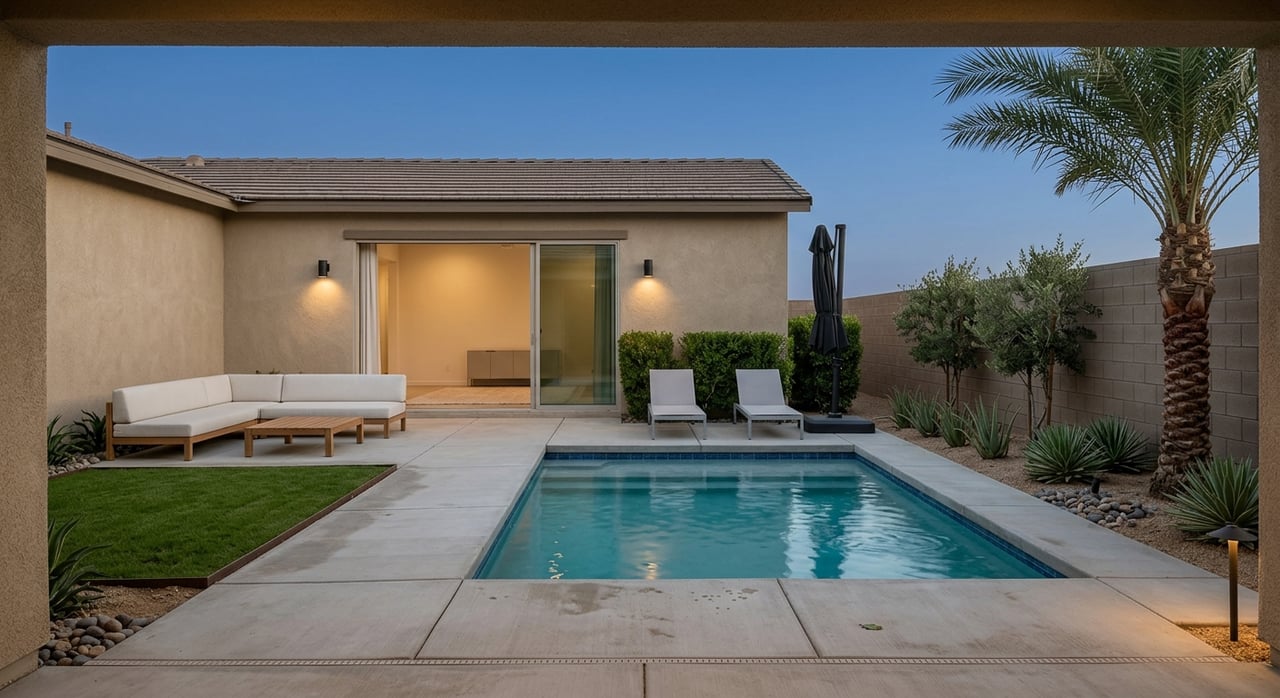
Festival renters value reliable central A/C, multiple bedrooms and bathrooms, fast Wi‑Fi, easy smart‑lock access, and secure off‑street parking. A private pool and outdoor living areas are major differentiators. Clear rules and logistics reduce friction and complaints, which helps protect your permit.
Price for event weekends
Dynamic pricing tools can help you capture the premium during Coachella and Stagecoach, where ADR can jump to multiples of standard rates. Set 3 to 4‑night minimums for festival weekends, and apply a cancellation policy that protects revenue. Many operators create separate calendar blocks for festival pricing so rates, minimums, and rules are easy to manage across channels. For data on event‑weekend spikes, see AirDNA’s Coachella analysis.
Operate with confidence
Turnover and staffing
Plan for back‑to‑back cleanings and high laundry volume during event weekends. Book extra cleaners and pool service well in advance, and have contingencies in case a crew falls through. A clear late‑night check‑in flow and guest guide with shuttle maps and rideshare pickup points will save you time and stress.
Noise, insurance, and enforcement
Both cities enforce nuisance rules, and Indio requires a 24/7 local contact who can respond quickly to complaints. Use strong house rules, guest acknowledgment forms, and consider non‑recording noise monitoring within local law. Maintain the required liability insurance minimum in Indio, which is $1,000,000 or approved platform‑equivalent coverage. All of these items are defined in Indio’s STR code.
Smooth the off‑season
Festival revenue is one piece of the annual picture. The valley’s winter and spring months draw higher demand, while summer is softer, so plan pricing and stay length accordingly. Some owners rotate to monthly stays in select months where allowed, which can reduce turnover costs. For seasonality context across desert lodging, see regional references in this SEC‑filed market overview.
You can also increase revenue per stay with add‑ons like pool heat, early check‑in, or pre‑booked shuttle arrangements. Refresh listing copy with festival‑specific keywords and logistics in the run‑up to ticket drops to improve conversion.
Acquisition checklist for investors
Confirm city eligibility and rules for the parcel, starting with Indio’s STR chapter if applicable.
Pull HOA documents and recorded CC&Rs to verify STR allowances.
Verify tax obligations. Both Indio and Coachella set TOT at 13 percent, and Coachella may require separate TBID remittance.
Model returns with event‑week ADR and occupancy, plus realistic cleaning and management costs.
Budget for permit and inspection fees, insurance, and TOT/TBID registrations.
Test parking capacity and festival access routes; align house layout with group needs.
Draft house rules and a guest acknowledgment that reflect city occupancy, noise, and event restrictions.
Line up a 24/7 local contact and vendor bench before peak weekends.
If financing, prepare conservative projections that do not over‑rely on festival weeks.
Timeline to be festival‑ready
- 6–9 months out: Underwrite candidates, verify zoning/HOA rules, and map your permit path. Start conversations with cleaners and pool vendors.
- 4–6 months out: Submit the STR application, schedule inspections, bind required insurance, and build your parking plan and house rules.
- 2–3 months out: Finalize dynamic pricing blocks and minimum stays, publish logistics in the listing, and confirm vendor availability.
- 2–4 weeks out: Send guests detailed arrival, parking, and shuttle guidance. Stock linens, consumables, and backups to streamline turnovers.
Common pitfalls to avoid
- Skipping HOA due diligence and discovering a short‑term ban after closing.
- Underestimating parking limits, which hurts guest experience and risks violations.
- Advertising event‑style gatherings without a special event permit.
- Counting on platforms to handle all taxes when TBID may still be your responsibility.
- Waiting too long to apply, which can push approval past festival dates.
Ready to find the right property and build a festival‑proof plan in Indio or Coachella? Get expert, local guidance and investor‑minded support with Marco Colantonio. Let’s make your desert rental a standout performer.
FAQs
What permits do I need to run a short‑term rental in Indio?
- Indio requires an STR permit, inspection, a 24/7 local contact, a parking plan, posted permit information inside the unit, and compliance with occupancy and minimum‑age rules; see the full requirements in Indio’s STR code.
How much transient occupancy tax will I pay in Indio or Coachella?
- Both cities set TOT at 13 percent for STRs; Coachella also notes that TBID may apply and platforms typically do not remit TBID for hosts; confirm procedures on Indio’s finance/TOT page and Coachella’s STR program page.
Are large parties allowed at festival rentals in Indio?
- No, gatherings above defined thresholds require a special event permit, and advertising a property as an event venue is prohibited without proper permits; see rules and enforcement in Indio’s STR code.
Does proximity to Empire Polo Club impact bookings and rates?
- Yes, walking distance or easy shuttle access can improve conversion and ADR during festival weekends; include official transit details from Coachella’s “Getting Here” guide in guest communications.
Do I need special insurance to operate in Indio?
- Indio requires proof of general liability insurance with at least a $1,000,000 combined single limit or approved platform‑equivalent coverage; policy requirements are detailed in Indio’s STR code.
What if the home is outside city limits in Riverside County?
- Properties in unincorporated areas follow the county’s STR program (Ordinance 927.x), which includes permits, inspections, response times, and potential density rules; review steps at the county’s Short‑Term Rental Program.